Are We Measuring What Young Scientists Can Really Do?

A first-grade class is outside observing the sky. The teacher has asked students to record the position of the sun in their science notebooks. Some carefully sketch where the sun appears. Others include details they notice around them—clouds, airplanes, or other features of the scene.
These drawings reveal something important about early science learning: young children notice different things, make sense of observations in different ways, and express their thinking differently. If science education aims to help students observe carefully, gather evidence, identify patterns, and explain phenomena, how do we know whether they are developing those skills?
For researchers, that question points to a critical challenge. What we measure determines what we can know. Researchers rely on assessments to understand how children learn, evaluate educational programs, and identify effective approaches to teaching science and engineering. Yet it can be surprisingly difficult to find assessments that capture these kinds of learning experiences and identify which assessments are appropriate for a particular study.
To better understand the current landscape and make existing assessments easier to access, EDC’s Center to Advance Elementary Science Assessment, Research, and Technology team conducted a systematic review of science and engineering assessments designed for children in PreK through grade 5. Following established systematic review methods, we searched across peer-reviewed research, education databases, technical reports, websites, and other publicly available resources. We identified hundreds of potential assessments, screened them against a common set of criteria, and coded the final set across multiple features, including grade level, STEM domain, assessment format, alignment with the Next Generation Science Standards (NGSS), and available evidence of quality.
The result is both a landscape analysis of the field and our new Elementary Science Collection of early elementary science and engineering assessments that was just launched on the Annenberg EdExchange EdInstruments online hub. We invite you to join us when we discuss both the landscape analysis and our new collection in a July 29 (1:00-2:00 ET) webinar (register here). Together, these efforts are intended to help researchers more easily identify assessment tools that fit their needs while also highlighting important gaps that remain.
What we found suggests that while the field has made meaningful progress, there is still work to do. Some areas of science and engineering are assessed far more often than others, assessments for children in PreK through grade 2 are relatively scarce, and many tools offer limited opportunities for students to show what they know beyond reading- and writing-based tasks.
Unequal Attention to All Science Domains
One encouraging finding is that assessment development has accelerated in recent years. Although our search focused on assessments developed over the past 20 years, most of the assessments we identified were developed within the last decade, reflecting growing interest in measuring science learning in more sophisticated ways. However, the available assessments do not cover all areas of science equally in grades Prek-5.
Many of the assessments focus on physical science and life science topics, while far fewer assess learning in earth and space science, engineering, computational thinking, or robotics. When assessment tools are concentrated in only a few domains, it becomes harder for researchers, educators, and policymakers to understand what students know and can do across the full range of STEM learning experiences. And a lack of evidence hampers research and improvement efforts. When few tools exist to measure learning in areas such as engineering, computational thinking, or robotics, we cannot build evidence about how children develop those skills and how best to support them.
The Youngest Learners Are Often Left Out
Another important finding involves grade-level coverage. Most assessments were designed for students in grades 3 through 5. In contrast, relatively few assessments targeted children in prekindergarten, kindergarten, or the early elementary grades.
This gap is particularly concerning because early childhood is a critical period for developing scientific curiosity and reasoning. Research has consistently shown that young children are capable of engaging in meaningful science and engineering practices when given developmentally appropriate opportunities. Moreover, early science experiences provide a critical foundation for later science interest and achievement.
If we lack tools to measure learning in the earliest grades, we cannot answer fundamental questions about children’s development, learning trajectories, or effects of early science experiences and miss opportunities to strengthen instruction when it can have the greatest long-term effect. Without appropriate measures, we cannot track how scientific thinking develops over time, evaluate the effectiveness of early interventions, or investigate how science learning supports growth in other domains such as language, literacy, problem-solving, and executive functioning. As a result, some of the most important questions about the benefits of early science education remain difficult to answer.
Measuring More Than Facts
The NGSS and other modern science education frameworks emphasize that science learning involves more than memorizing information. Students should be able to ask questions, analyze evidence, explain phenomena, and apply their knowledge in new situations.
Our findings suggest that many newer assessments are beginning to reflect this broader vision. Among assessments that referenced NGSS, most claimed to measure multiple dimensions of science learning rather than content knowledge alone.
At the same time, there is room for growth. Only 37% of the assessments we reviewed were multidimensional. However, newer assessments were more likely to be, which is promising, indicating an important shift in the field toward developing tools that capture both what students know and how they use that knowledge.
Many of the assessments we reviewed relied heavily on traditional paper-and-pencil formats. While these approaches can provide useful information, they may not always be the best way to understand how young children think and reason. As a recent National Academies report notes, “Young children’s emerging language, literacy, attention, and self-regulation skills can make it difficult for traditional assessments to fully capture their understanding.”
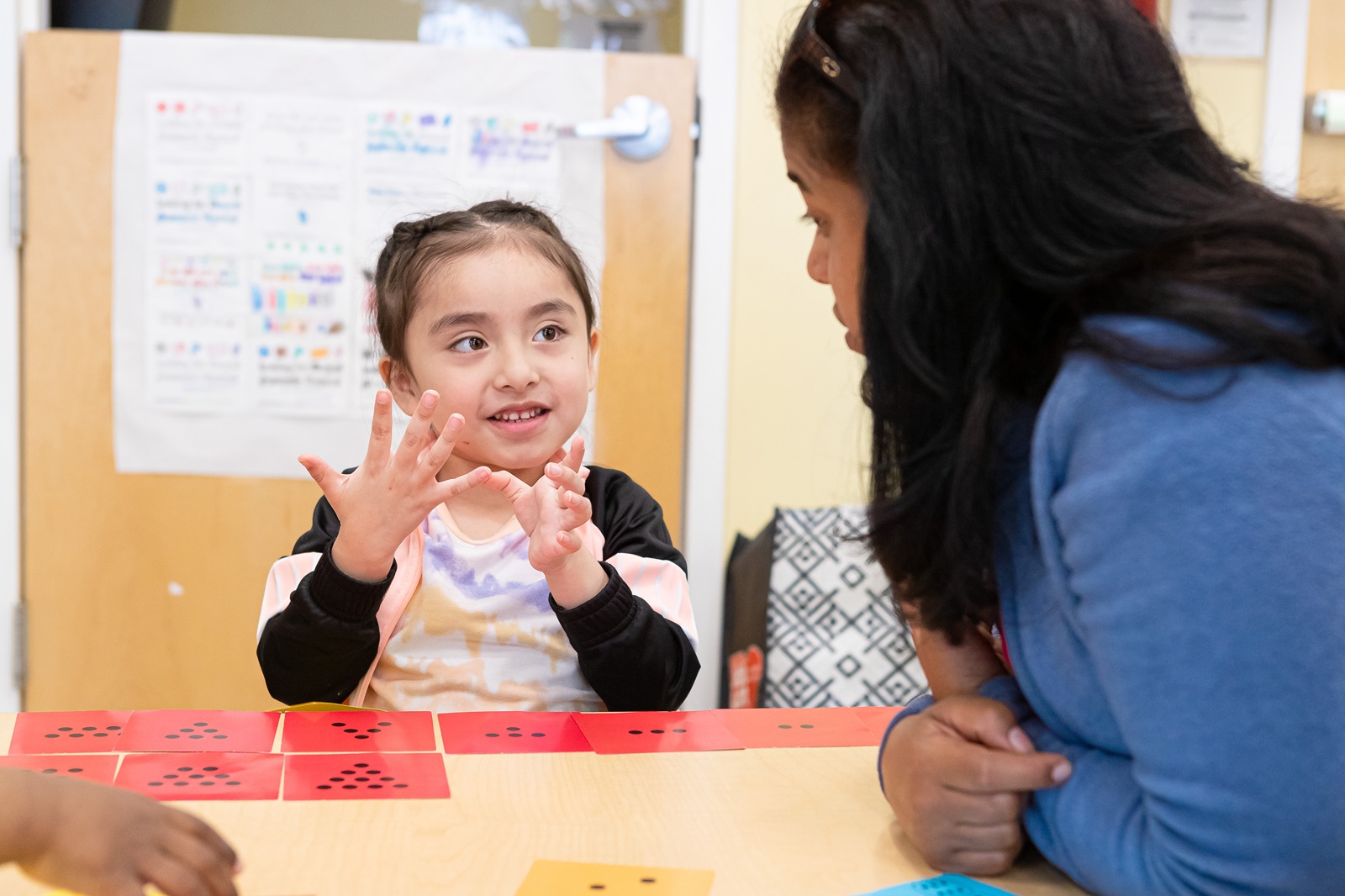
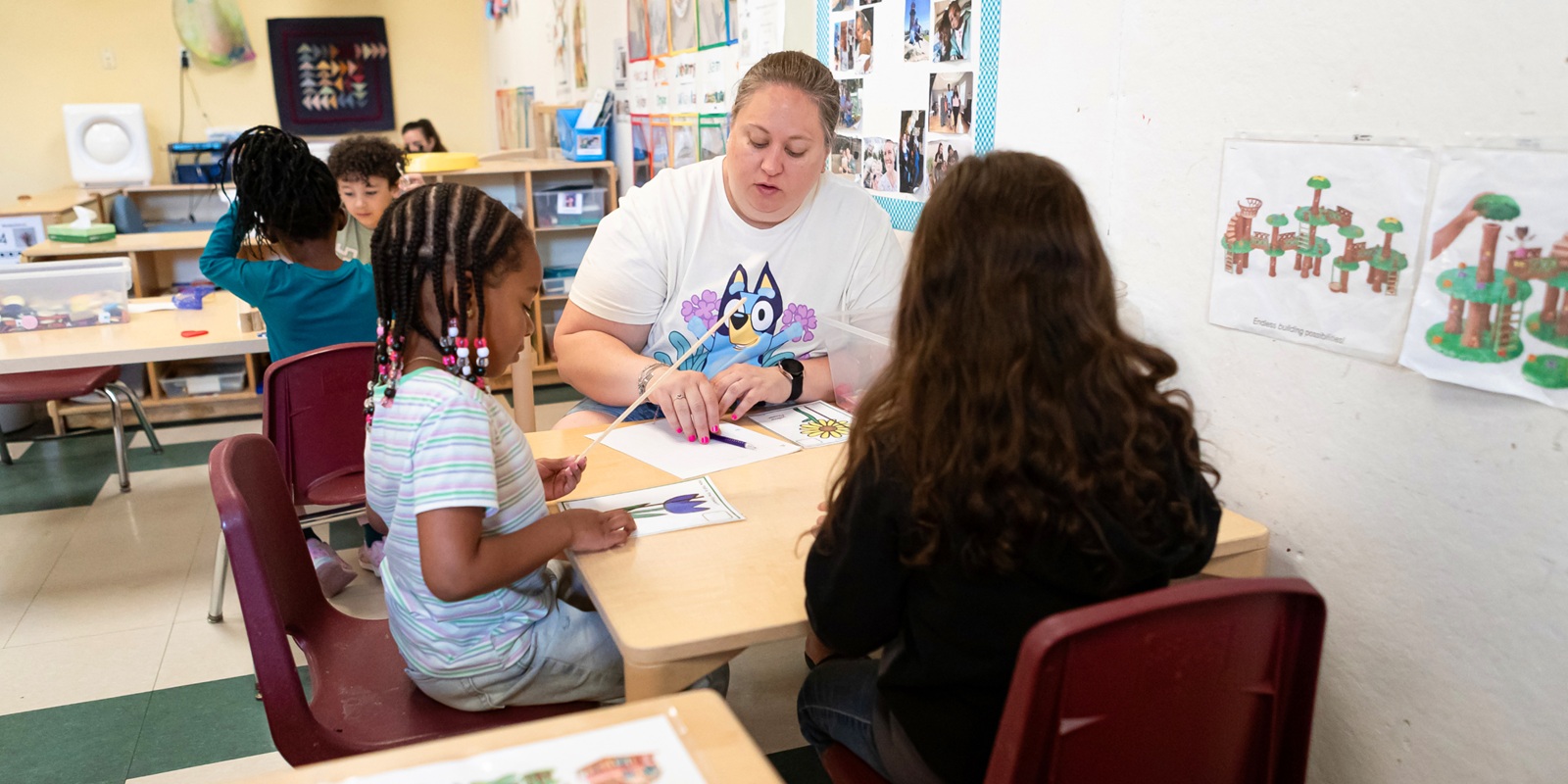
Young learners often express their ideas through conversation, drawing, building, modeling, or hands-on exploration. Yet relatively few assessments offered students multiple ways to demonstrate their understanding. This mismatch matters because traditional written assessments likely do not fully capture how students are able to engage in science practices. For example, students may be able to investigate a problem or apply scientific ideas during an activity, but struggle to communicate that understanding through a conventional written assessment format.
When measures rely on reading, writing, or language-intensive tasks, scores can reflect skills beyond the science constructs assessed. This gap has implications not only for measurement quality but also for effectiveness. Assessments that depend heavily on reading and writing may not fully capture the abilities of multilingual learners, students with disabilities, or children whose strengths emerge through other forms of communication. If assessments capture only a narrow slice of student learning, researchers may underestimate the effects of instructional approaches that emphasize inquiry, engineering design, collaboration, or hands-on problem solving.
Looking Ahead
The findings point to several priorities for the field, including expanding assessment coverage across STEM domains, developing more tools for younger learners, and creating assessments that better capture multidimensional science learning. But improving assessment is only part of the solution. Researchers also need better ways to find and use the assessments that already exist.
By making this information easier to find and navigate on our new EdInstruments Elementary Science Collection page, we hope to support researchers, developers, and education leaders in selecting assessments that align with their goals, identifying gaps in the current landscape, and informing future assessment development.
If we want to understand how children learn science and engineering, and how to support that learning effectively, we need both stronger assessments and better access to the assessments that already exist. The good news is that the field is moving in that direction.
By continuing to invest in more inclusive, developmentally appropriate, and multidimensional assessments, while also making assessment resources more accessible, we can build a stronger foundation for science learning from the earliest years onward.
Do you have questions about our EdInstruments Elementary Science Collection page or CAESART’s work? Please reach out and contact us.