Join EDC at AERA 2026

On April 8 to 12, EDC educational R&D leaders will present findings focused on strategies to improve students’ STEM learning and position them for college and career success at the American Educational Research Association Annual Meeting in Los Angeles, California. Our sessions focus on assessing artificial intelligence (AI) literacy, strengthening professional learning for mathematics teachers to improve student outcomes, sustaining computer science education, and using Maker learning and mentoring to help youth build key workforce skills.
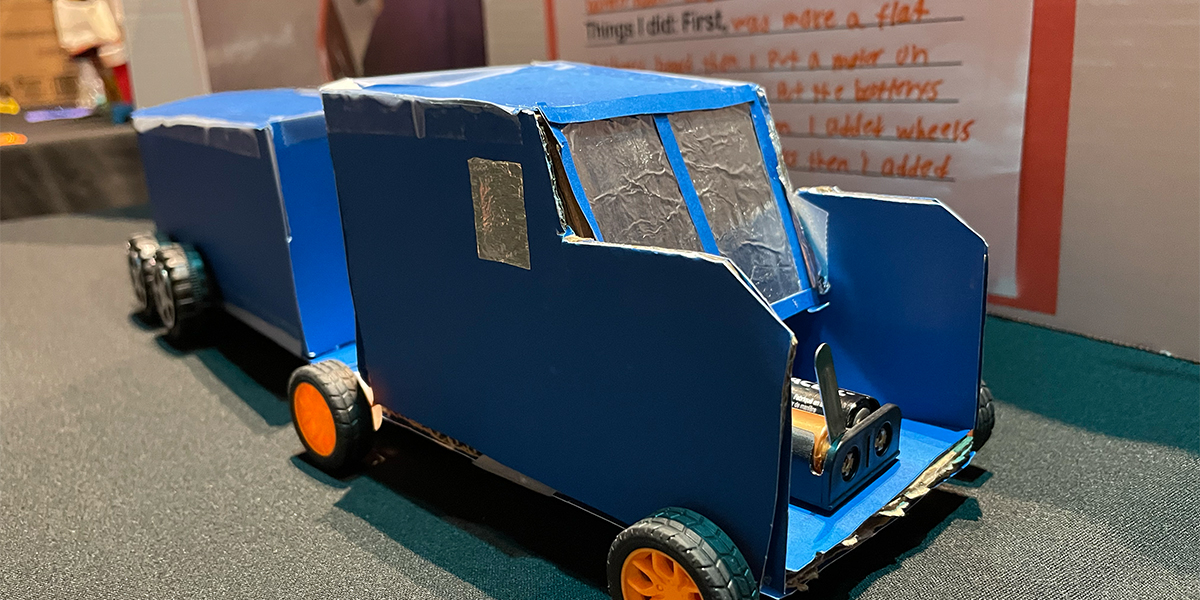
“Figuring It Out Together,” Wednesday, April 8 (7:45–9:15 a.m. PT): In this session, Wendy Martin, Sam Tumolo, and collaborators will present research on a STEM mentorship program that pairs autistic college mentors with autistic high school mentees. Mentors and mentees create STEM-focused Maker projects and discuss the transition to college to support high school students’ readiness and success.
“Applying Universal Design for Learning to Create Inclusive Museum Activities,” Wednesday, April 8 (11:45–1:15 p.m. PT) and “Belonging Through Design,” Thursday, April 9 (7:45–9:15 a.m. PT): In these two related sessions, Wendy Martin, Sam Tumolo, Ariana Riccio Arista, and colleagues will share findings from a program in which autistic teens played a lead role in helping three museums develop guidelines for creating hands-on engineering activities. The program sought to build teens’ understanding of the engineering design process, as well as to provide guidance to museums on how to invite and celebrate all visitors’ approaches to learning—instead of designing separate programs for different types of learners.
“Computational Thinking (CT) Integration Framework,” Thursday, April 9 (7:45–9:15 a.m. PT): During a working group roundtable, Heather Sherwood’s work on developing a self-assessment and planning tool that describe the core elements that support CT integration across elementary school curricula and grade levels will be shared by colleague Cheri Fancsali. The tool can support setting and evaluating progress toward goals to promote students’ computational thinking—which research shows is key to students’ problem-solving skills in core content areas.
“An Evaluation of The Math for All Professional Learning Program,” Saturday, April 11 (7:45–9:15 a.m. PT): In this roundtable, EDC’s Babette Moeller and colleagues John Hitchcock, Jason Schoenberger, and Teresa Garcia Duncan will share findings from an independent evaluation of the Math for All professional development program. The program has been demonstrated to positively impact teachers’ knowledge, beliefs, and classroom practices and to improve students’ performance in mathematics. It is currently being expanded to students in five states.
“Landscape of AI Literacy Assessments: A Comprehensive Review,” Saturday, April 11 (1:45–3:15 p.m. PT): Lukas Winfield will present a paper on his recent analysis of 23 peer-reviewed AI literacy assessments. As AI reshapes the workforce, AI literacy has emerged as a critical competency. Among Lukas’s findings: Although there is a pressing need for valid tools to assess AI literacy, few of the rapid proliferation of assessments use objective measures and most include only self-report items.
Learn more about EDC’s Research & Evaluation, STEM Education & Workforce Development, and Human-Centered AI work.