From Small Changes to Stronger Systems
How Home Visitors Are Making Well-Child Visits Work Better for Families

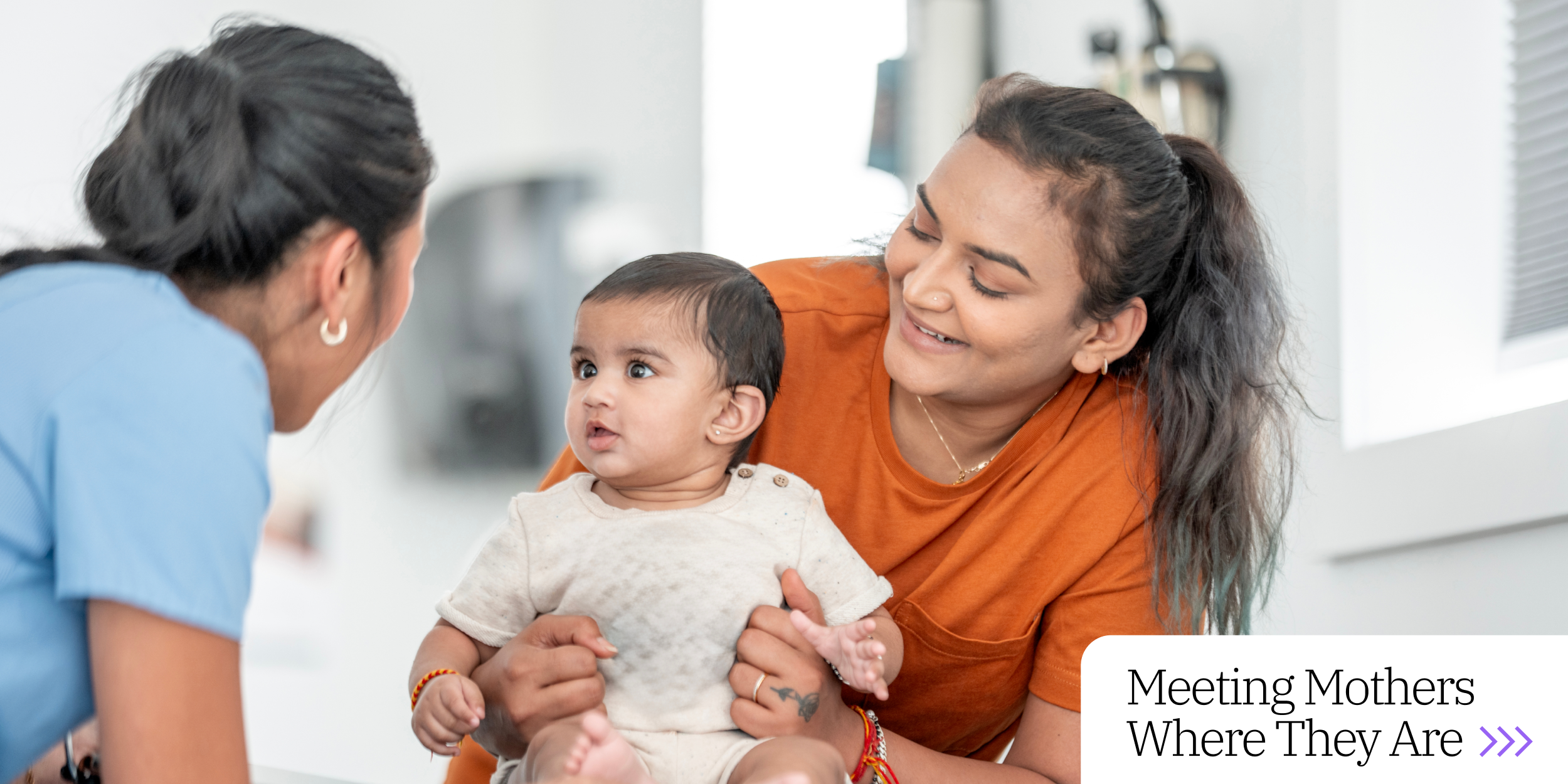
Well-child visits are one of the most important touchpoints in a child’s early life. Yet for many families, getting there—and getting the most out of the visit—is easier said than done.
Over the past 10 months, home visiting teams across three states took on that challenge directly. Through the EDC-led HV CoIIN Well-Child Visits Collaborative, they tested practical strategies to help families prepare for, complete, and follow up on well-child visits. At their recent harvest call, they gathered to share what they learned.
Why Well-Child Visits Matter
Well-child visits are more than routine checkups. They support screening, prevention, and early identification of concerns. They also provide opportunities to strengthen relationships between families and providers and connect families to needed supports.
Home visiting programs are well positioned to support families in preparing for and following up on these visits. But doing so consistently requires coordinated systems, clear workflows, and strong communication across providers, home visitors, and families.
In practice, families may be unsure what to expect, what questions to ask, or how to follow up after a visit. Barriers can include logistics, communication challenges, or past experiences with care.
Through HV CoIIN, teams used a structured continuous quality improvement (CQI) approach to address these challenges. Using shared aims, data tracking, and small tests of change, they tested practical strategies and refined them over time.
Rather than redesigning entire systems, teams focused on what was within reach.
What Changed in Practice
Guided by EDC’s improvement framework, teams tested a range of practical changes to improve how families experience well-child visits.
Some focused on preparation. They introduced simple tools—such as handouts, planning guides, and talking points—to help families feel more ready for appointments.
Others focused on follow-up. Teams built more consistent processes for checking in after visits and confirming families’ understanding of next steps.
Some efforts focused on coordination, strengthening communication with pediatric providers and improving how information is shared across systems. A few teams also tested whether having a home visitor attend a well-child visit could help families feel more supported.
This work highlights the importance of strong partnerships between home visiting and healthcare. Dr. Cynthia Minkovitz—a pediatrician, home visiting researcher at Johns Hopkins University, and faculty member for this collaborative—brought a critical healthcare perspective on how care teams can better align around families. Her contributions helped home visiting teams build a stronger understanding of what happens during well-child visits, what families can expect, and why these visits matter—insights that proved essential in supporting families to attend and see the value of preventive care. Together, this work reinforces the importance of connecting what happens in the clinic with the supports families receive at home and in their communities.
Not every change worked right away. That was part of the process.
Instead of waiting for a perfect solution, teams tested ideas, learned from the results, and refined their approach. Over time, these small tests led to more consistent and supportive systems for families.
One parent shared, “I used to feel a bit nervous about my child’s check-up, but now I know I can ask questions and make sure they get the care they need. It feels great to be more involved.”
In less than a year, these small tests of change led to measurable improvements in how families experience care:
- All teams were collecting and submitting data monthly
- Teams completed more than 100 test cycles
- Teams identified 30 changes they plan to sustain and make part of their regular practice
- Teams also reported increased confidence in using quality improvement methods to test and track change
What Stood Out Across Teams
As teams reflected on their work, several themes emerged across states and programs.
- Start small—and keep going. Progress came from staying with the process. Teams did not get everything right on the first try. They tested, adjusted, and continued building on what they learned.
- Use data as a learning tool. Data became more than a reporting requirement. Teams used it to identify where families were getting stuck, track improvements, and decide which changes to continue. One collaborative measure—planning with caregivers prior to a well-child visit—increased from 39% at the start to 58% by March.[1]
- Strong relationships support coordination. Improving well-child visits is not just about scheduling appointments; it requires coordination across home visitors, providers, and families. Several teams found that stronger communication with providers reduced confusion and improved coordination.
- Family voice strengthens solutions. When teams listened closely to families, they identified gaps that were not always visible in data alone. In several cases, teams adjusted their approach after hearing directly from families. What looked like a process issue often reflected practical challenges—such as timing, transportation, or uncertainty about what to expect. These insights helped teams focus on changes that made a real difference.
What’s Next
The Well-Child Visits Collaborative is part of HV CoIIN’s broader effort to strengthen home visiting systems through shared learning and continuous quality improvement. This work builds on HV CoIIN’s long-standing partnership with MIECHV programs and reflects EDC’s broader commitment to strengthening perinatal and early childhood systems of care that support families in their communities. As MIECHV marks 15 years of service, efforts like this highlight the continued importance of connecting home visiting, healthcare, and community supports to improve outcomes for families.
Two new collaboratives are launching this spring and summer:
- Sprint to Sustain Breastfeeding Outcomes
- Scaling Solutions in Staff Recruitment and Retention
- Improving Postpartum Well-Being Through Home Visiting
Both build on the same core idea that shaped this work: small tests of change, carried out consistently and thoughtfully, can improve systems in ways that matter for families and staff alike.
If you’re involved in home visiting and want to connect with this work—or learn how your program might participate—we’d love to hear from you!
To learn more about HV CoIIN, explore resources, or find information about current and upcoming collaboratives, visit hv-coiin.edc.org.
Meaningful improvement does not always begin with a major overhaul. Often, it begins with a clear question, a small test, and the willingness to keep learning.
1HV CoIIN identifies improvement by calculating the median of the first six data points (39%) and calculating a second, shifted median (58%) from the six consecutive data points that fell above the initial median. Interpretation of the data should be considered descriptive rather than strictly statistical.
This project is supported by the Health Resources and Services Administration (HRSA) of the U.S. Department of Health and Human Services (HHS) under grant number UF4MC26525, Home Visiting Collaborative Improvement and Innovation Network (HV CoIIN). This information or content and conclusions are those of the author and should not be construed as the official position or policy of, nor should any endorsements be inferred by HRSA, HHS or the U.S. Government.